 Preview Post
- October 24, 2026

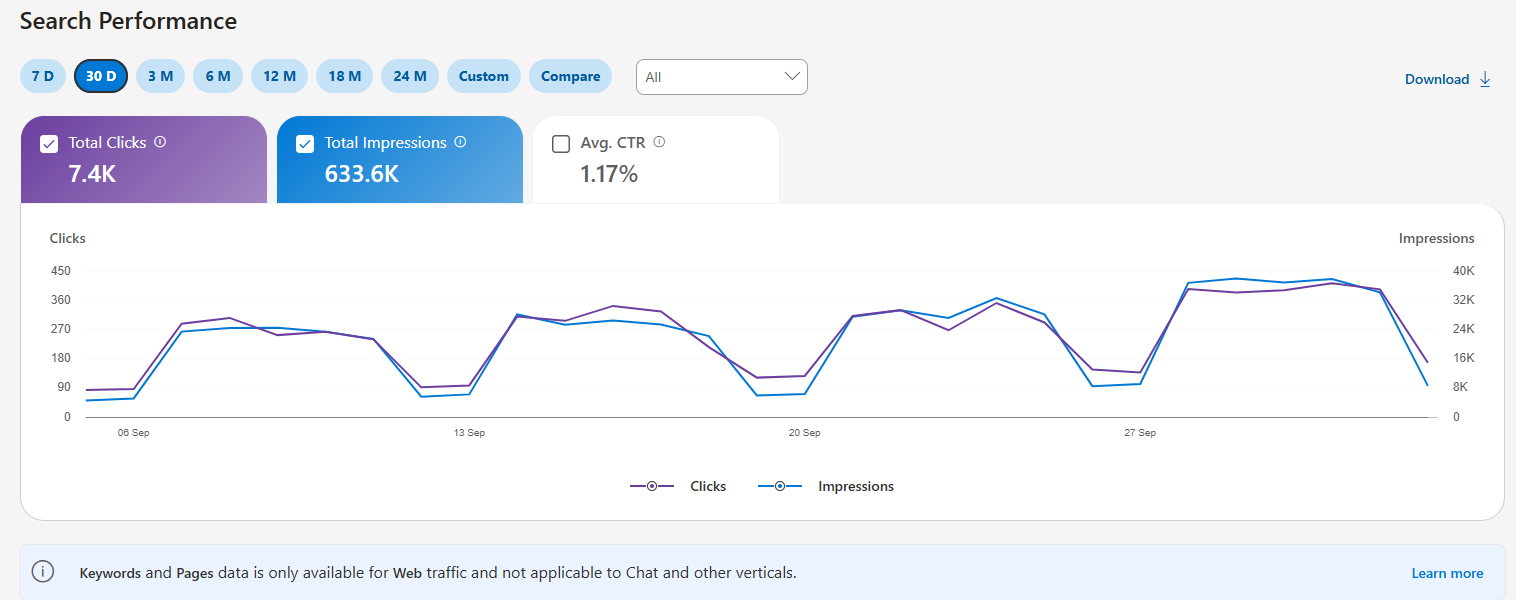
I’ve been looking into 30-day (September 2026) window of Bing search data alongside server logs to get a better idea of what a Bing visitor actually looks like.
What stood out almost immediately was just how heavily the traffic leaned towards desktop. This wasn’t a marginal difference either. Across the 30-day window, around nine in ten Bing clicks came from desktop devices, with mobile accounting for a relatively small proportion of the traffic.
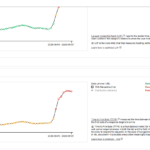
Digging further into Bing Webmaster Tools backed this up. The site recorded 633,600 impressions and 7,400 clicks during the 30-day period, with desktop responsible for the vast majority of both.
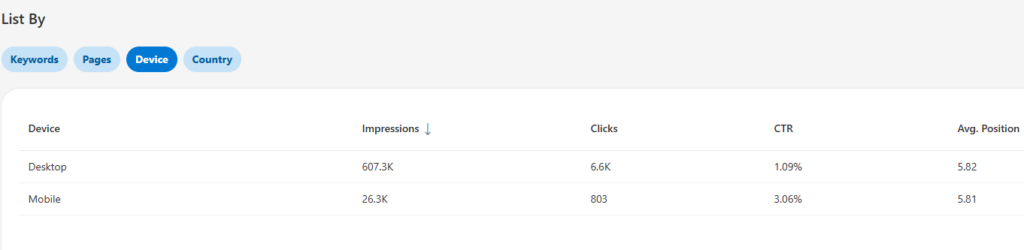
Image: Bing Webmaster Tools
That means roughly 96% of Bing impressions were generated on desktop, with around nine in ten clicks also coming from desktop.
There was also almost no difference in average ranking position between the two devices. Desktop averaged 5.82, while mobile averaged 5.81. Mobile actually produced a higher CTR at 3.06%, compared with 1.09% on desktop, but there was substantially less mobile search visibility to generate clicks from in the first place.
I then compared the Bing Webmaster Tools data with 30 days of server-side referral data. After excluding known bots and asset requests, the logs contained 7,562 Bing-referred page requests that could be classified by device and browser.
Of those requests:
The important point here is that two different datasets are showing broadly the same behaviour. Bing Webmaster Tools shows the search demand and clicks heavily weighted towards desktop. The server logs then show that the identifiable Bing referrals reaching the site are also overwhelmingly desktop.
The logs are page requests rather than unique users, so they should not be treated as a count of individual people. But as a view of the technical profile of traffic reaching the server, the desktop bias is clear.
Across those 7,562 Bing-referred page requests:
So if I had to describe the identifiable Bing visitor from this 30-day sample using just two technical characteristics, it would be desktop and Microsoft Edge.
That relationship is not particularly difficult to explain. Bing is the default search engine in Microsoft Edge unless the user changes it, while Windows Search uses Bing for web results. Microsoft also confirms that web results from Windows Search open in Edge.
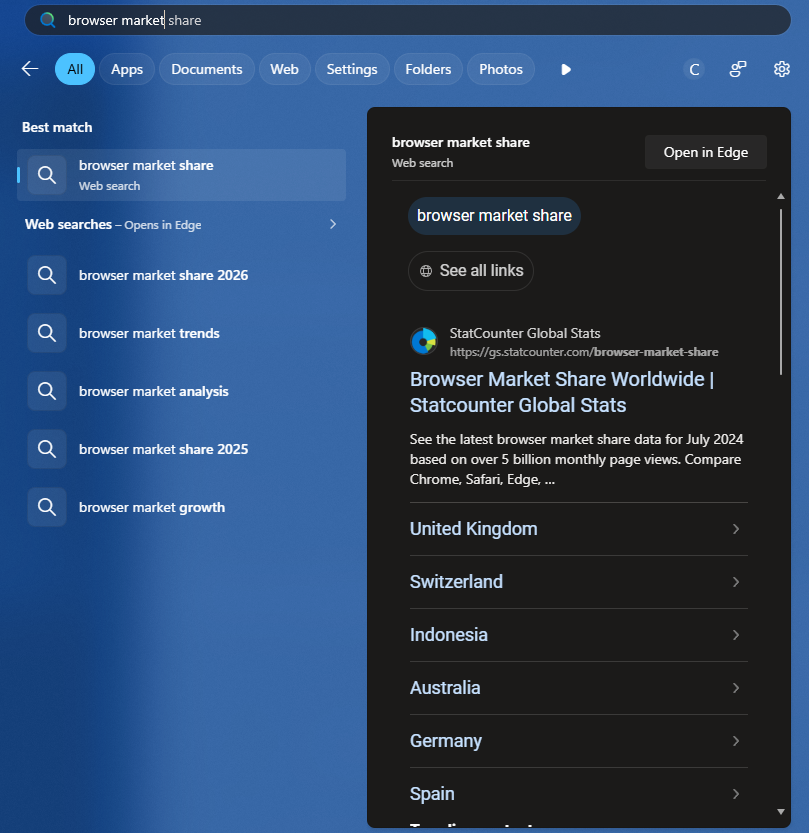
Image: Windows 11 > Search Tool
The logs cannot tell me whether a visitor searched directly on Bing.com, used the Edge address bar or arrived through another Microsoft search surface.
What they can show is the browser and device that eventually made the request, and in this sample the combination is remarkably consistent.
Microsoft Edge is Chromium-powered, so it shares a large amount of underlying browser technology with Google Chrome. From a rendering and development perspective, that means behaviour between the two is often very similar.
Google’s Chrome User Experience Report, or CrUX, is built from eligible Chrome users. Google’s own methodology specifically lists other Chromium browsers, including Microsoft Edge, as excluded from contributing data to CrUX.
So an Edge visitor can be using Chromium and experiencing exactly the same page as a Chrome visitor, but their experience is not being added to Google’s CrUX dataset.
That can matter if Bing represents a meaningful part of your audience. A large volume of genuine Edge traffic can exist without contributing anything to the Chrome field data used across Google’s Core Web Vitals reporting.
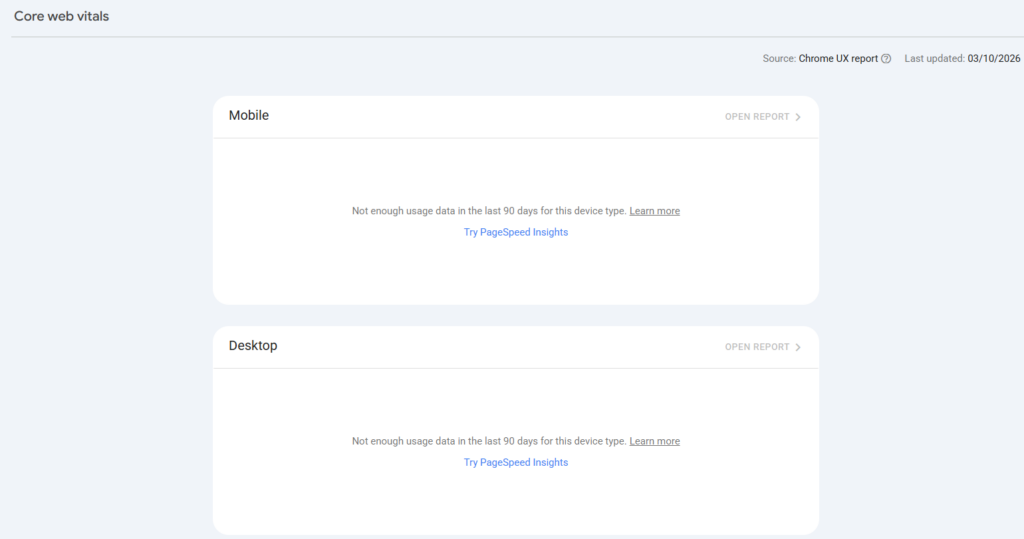
Image: Google Search Console > Core Web Vitals
Microsoft Copilot and Microsoft Copilot Chat can use Bing when web search is enabled. Microsoft documents that Copilot can generate a search query from the user’s prompt, send it to the Bing search service and use the returned information to help ground its response.
Bing Webmaster Tools is now exposing some of this through its AI Performance reporting. In the same 30-day window used for this analysis, the site recorded 175,800 citations across Microsoft Copilots and Partners, with an average of 714 cited pages shown in the report below.
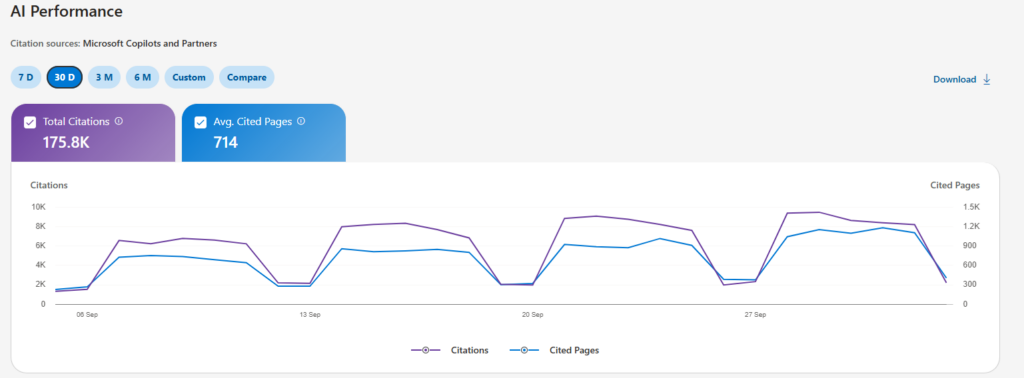
Image: Bing Webmaster Tools > AI Performance
Those citations should not be confused with visits or clicks. They are a separate visibility metric, but they do demonstrate that Bing’s index and search infrastructure now feeds Microsoft experiences beyond the traditional Bing search results page.
That makes understanding Bing traffic more useful than simply looking at Bing’s percentage of the wider conventional search market.

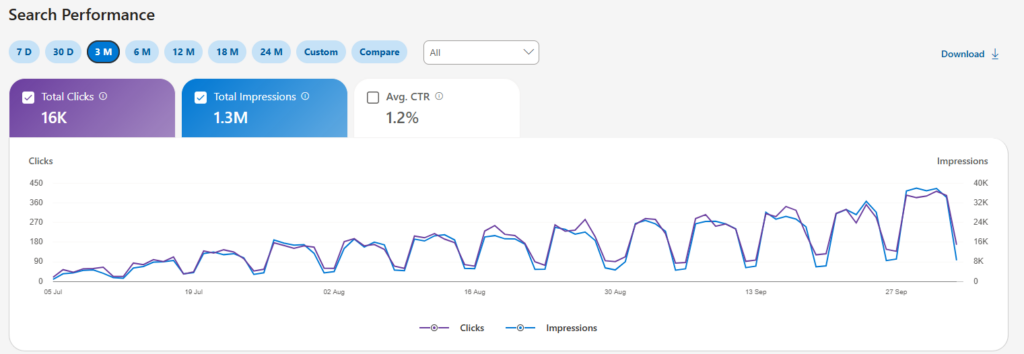
For this 30-day sample, Bing Webmaster Tools showed around nine in ten clicks coming from desktop. Server logs independently showed 92.9% of identifiable Bing-referred page requests coming from desktop, with 90.5% using Microsoft Edge.
That sits in stark contrast to the wider mobile search market. StatCounter estimates that Google accounted for 98.03% of UK mobile search engine market share in September 2026, while Bing accounted for just 0.43%

For this site, across this 30-day window, the conclusion is difficult to miss: Bing search traffic was overwhelmingly desktop, and the browser behind it was overwhelmingly Microsoft Edge.



Discussion
This discussion lives in the forum. Replies appear here and in the thread.
No replies yet. Start the discussion in the forum.