 Preview Post
- October 5, 2026


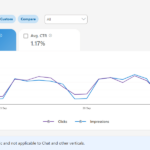
Over the past several months, I have been tracking how often ChatGPT cites my site, how often it sends traffic and how those two numbers compare. Out of this came something surprisingly useful: a way of calculating what is basically a ChatGPT CTR, the ratio between how often you are cited and how often someone actually clicks through.
A practical way to measure how visible you really are inside ChatGPT, using the data that is already there. It is also very simple once you know what to look for. This is a useful supplement to prompt visibility tracking tools. Dare I say it is more accurate too.
All you need are two things – citations and UTM traffic.
utm_source=chatgpt.com parameter to outbound links. That makes life easier. Any analytics platform can filter this, including GA4. Once you have both, you can calculate CTR at three levels.This is the broadest view and the one most people will start with.
Total ChatGPT citations / Total sessions with utm_source=chatgpt.com
If ChatGPT cited you 12,000 times in a 4 week period and you received 12 visits, your CTR is 0.01. That’s not unusual, too. ChatGPT will reference you far more often than it will send traffic.
CTR as a percentage:
12 ÷ 12,000 = 0.001
0.001 × 100 = 0.1 percent
A low CTR does not mean poor performance, it simply reflects how AI assistants work. But yes, it is worryingly low.
This is where things can get a little more interesting. You can break CTR down by category, topic or section of your site.
Examples:
• /blog/ai-search/
• /guides/technical-seo/
• /tools/
Different parts of your site will behave differently in LLM retrieval. Some clusters will be cited heavily but clicked rarely. Others may punch above their weight. This level helps you understand:
• which topics LLMs associate with you
• which parts of your content perform best in retrieval
• where you might want to strengthen entity clarity or internal linking
This is the most granular level and probably the most actionable. Formula stays the same, just scoped to a single URL.
It helps you see:
• which pages get cited but never clicked
• which pages convert citations into visits
• which topics ChatGPT sees you as an authority on
• and which pages might need tightening in structure or clarity
Sometimes a page is cited constantly but gets no clicks. That might mean ChatGPT uses it as a reference point but not a recommendation. Other times you might find a page that quietly attracts meaningful traffic despite low citation volume.
ChatGPT CTR is not about chasing traffic. The volumes will never match classic SEO. It is about understanding your visibility, your positioning and your role inside AI driven search journeys.
It helps answer questions like:
• Are LLMs consistently finding and trusting my content
• Which areas of my site are strongest in retrieval
• Where am I being referenced but not clicked
• How does my topical authority look through an LLM lens
The numbers do not need to be perfect. They just need to be consistent.
Both Perplexity and Claude will eventually settle on consistent referral behaviour. The same logic applies:
• citations
• referrals
• page behaviour
• topic clusters
It is the same concept, just through different interfaces.
This metric is a simple high-level approach, but it gives you a clearer picture of how AI assistants actually treat your site. It is early days, but for me it has already become a useful part of understanding what LLM visibility really looks like. Also, people are talking about this topic on LinkedIN, it is surprising many how low the CTR actually is.



Comments:
Comments are closed.